



On November 19, we dropped our 2025 Report Card on Physical Activity for Adults, Moving Beyond Stagnation: Elevating Physical Activity in Canada. It takes a look at 17 indicators, including six daily movement behaviours from the Canadian 24-Hour Movement Guidelines for Adults:
- Moderate-to-vigorous physical activity (MVPA)
- Muscle-strengthening activities
- Balance activities
- Sedentary time
- Recreational screen time
- Sleep
According to our latest Report Card, most adults in Canada don’t meet these Guidelines. But the good news is that if you’re part of the majority, you can turn things around – one habit at a time!
Let’s break down the Guidelines, explore some of the movement behaviours assessed in our Report Card and share tips and tools to help you follow the Guidelines to a tee.
What are the Canadian 24-Hour Movement Guidelines for Adults*?
The Guidelines provide a roadmap of what a healthy 24 hours looks like. Rather than focusing on only one movement behaviour, they share recommendations for physical activity, sedentary time (the time you spend not moving while awake in a sitting, reclining or lying position) and sleep and explain how they all work together.
Physical activity guidelines:
- Aim for at least 150 minutes of MVPA per week (about 20 minutes a day).
- Perform muscle-strengthening activities using your major muscle groups at least twice a week.
- If you’re 65 or older, do activities that challenge your balance every week like tai chi, yoga or dance.
- Sneak in several hours of light physical activity, including standing if you’re able.

- Mix things up by participating in a variety of physical activities, including:
-
- Recreational activities
-
- Active transportation (e.g., cycling to work)
-
- Exercise (e.g., resistance training)
-
- Weight-bearing activities (ones where your body works against gravity such as walking)
-
- Non-weight-bearing activities (ones that don’t put pressure on certain parts of your body, like swimming)
-
- Moderate-to-vigorous activities (e.g., hiking and Zumba)
-
- Light-intensity activities (e.g., yoga and tai chi)
-
- Structured activities (e.g., soccer leagues and tennis tournaments)
-
- Unstructured activities (e.g., playing with your kid(s) or pet(s) and dancing).
-
- Get active in different places: indoors, outdoors, at home, at work and in the community.
Sedentary time guidelines:
Limit your sedentary time to eight hours or fewer per day, including keeping recreational screen time to max three hours a day and breaking up long periods of sitting as often as you can.
Sleep guidelines:
Regularly get seven to nine hours of good-quality sleep per day (seven to eight hours if you’re 65+) and keep your bed and wake-up times consistent.
*Note: The Canadian 24-Hour Movement Guidelines apply to most adults, but there are different ones for adults who are pregnant or recently gave birth. If you have a medical condition or disability, talk to a health professional for tailored advice.
Why follow the Guidelines?
Research shows that meeting them is linked to:
- Lower risk of cardiovascular disease, high blood pressure, type 2 diabetes, some cancers, anxiety, depression and dementia.
- Better bone health, physical function, cognition and overall quality of life.
But following any of the Guidelines – even to a small degree – can benefit your health and well-being. There are many ways to move across the day, and all movement matters!
How to follow the Guidelines
Now that you know about the Canadian 24-Hour Movement Guidelines, it’s time to reveal how many adults in Canada meet them and share tips, tools and resources to help you successfully follow them.
1. Do 150 minutes of MVPA per week
MVPA is any movement that uses at least three times as much energy as when you’re not moving. Examples include heart-pumping activities like jogging, dancing, swimming and tennis.
Although the amount of physical activity you do, regardless of its intensity, is more important for your overall health, doing it at a faster pace or higher intensity may give you extra benefits. For example, regularly participating in MVPA can improve your quality of life and reduce your risk of chronic diseases.

Less than half (46%) of adults in Canada reach the weekly MVPA goal, according to our most recent Report Card. Are you part of the 54% of adults who aren’t there yet? Don’t sweat it because we’ve got you covered!
Try watching any of these 20-minute workout videos. If you follow along with one every day of the week, you’ll hit your goal:
- Moderate cardio workout
- Variable-intensity interval training
- High-intensity interval training (HIIT)
2. Perform muscle-strengthening activities using major muscle groups at least twice a week
Muscle-strengthening activities use resistance to make your muscles contract, boosting your strength, improving your endurance and increasing the size of your muscles. Examples include using resistance bands, lifting weights like dumbbells or barbells, performing bodyweight exercises such as squats and push-ups, carrying heavy shopping bags and gardening that involves digging or shoveling.
Targeted muscle-strengthening exercises can promote strength and balance and prevent joint-related issues like osteoarthritis. Following a targeted strength-training program can also help reduce your risk of muscle overuse injuries by about half.

Our 2025 Report Card finds that only 35% of adults meet the muscle-strengthening activities guideline. To help you follow this recommendation, try a couple of these exercise routines every week:
- 5 functional training exercises to help you live your best life
- 6 beginner calisthenics exercises to easily fit into your workday
- Gentle strength workout
- Low-intensity strength workout
- Moderate strength workout
- High-intensity strength workout
3. Do activities that challenge your balance (for adults 65+)
Balance activities help improve your posture, stability and coordination and help reduce your chances of falling or bumping into objects. Examples include ballroom dancing, yoga, tai chi, bowling and exergames (interactive video games that use physical exercise) that challenge your balance.
Research suggests that creative, folk and ballroom dance can enhance balance and reduce the risk of falls in adults who are 60+, including those with Parkinson’s disease. Studies also show that compared to physical training, exergames can lead to greater improvements in controlling posture and in dynamic balance for older adults.
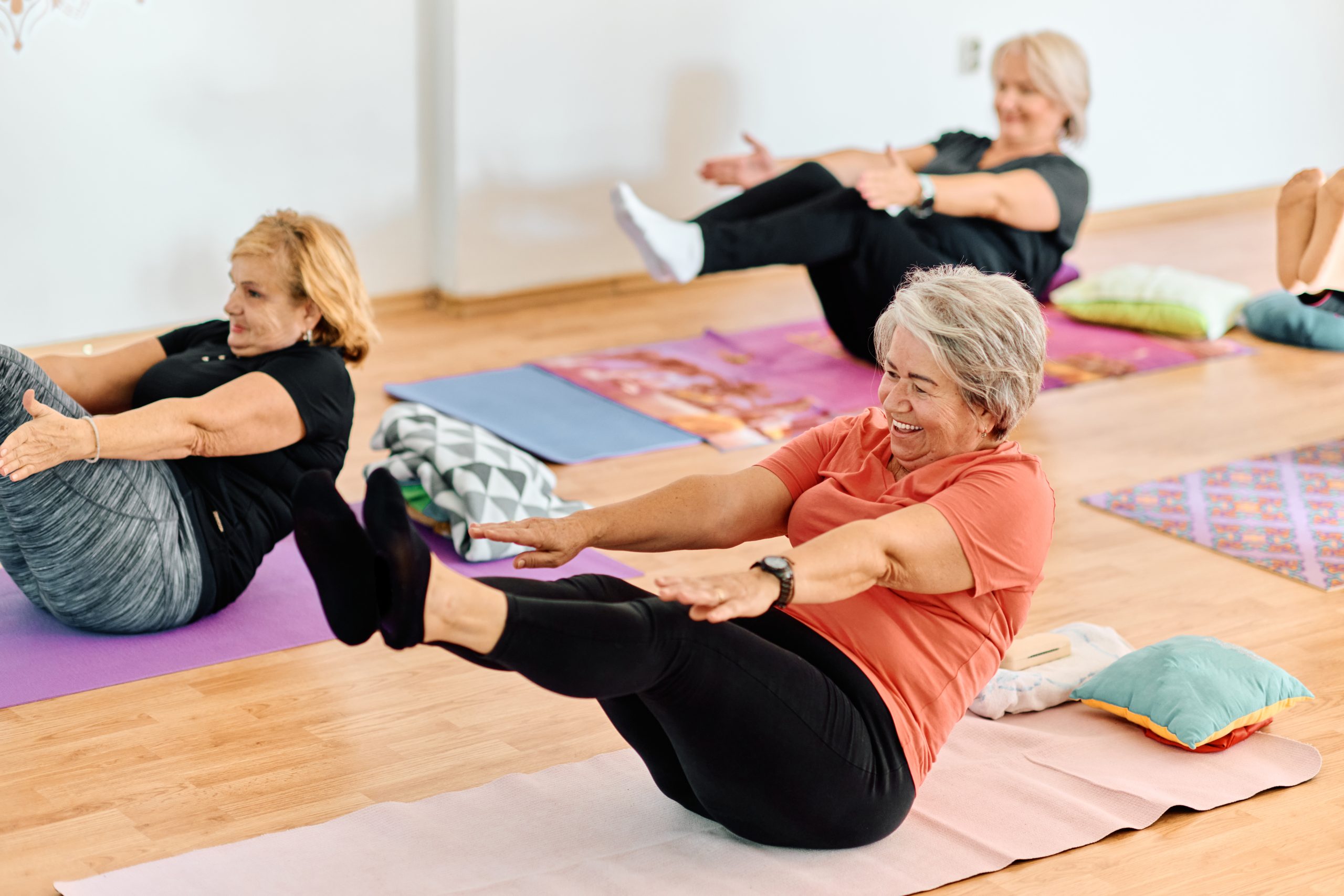
According to our latest Report Card, 31% of adults 65+ meet the balance activities guideline. Want to put your balance to the test and improve it? Check out these workout videos:
4. Keep sedentary time to max eight hours a day
“Sedentary time” is the time you spend not moving while you’re awake in a sitting, reclining or lying position. The Canadian 24-Hour Movement Guidelines recommend limiting it to eight hours or fewer per day, including breaking up long periods of sitting as often as possible.
Instead of assessing sedentary time in our 2025 Report Card, we looked at “stationary time”, which also includes not moving while standing. Stationary time is often used in place of sitting time because it’s like that behaviour and easier to measure. Plus, breaking up long periods of sitting may not be possible for adults who use wheelchairs, and adults need to take movement breaks, regardless of their physical ability.

Breaking up stationary time with short bouts of physical activity can boost your brain function, improving your ability to perform certain mental tasks, at least short term. Our most recent Report Card shows that 42% of adults meet the stationary time guideline of eight hours or fewer per day.
Here are some tips to help you break up and reduce your sedentary and stationary time:
- Schedule movement breaks like you would meetings, calls or appointments.
- Take meetings and calls on the move or have short, two-minute, mid-meeting stretch breaks.
- Try using an adjustable or standing desk and switch between sitting and standing throughout the day if you’re able.
- Stretch or use a treadmill, elliptical or stationary bike while watching TV shows and movies or treat commercial breaks as reminders to get moving.
- Use active transportation like walking/wheeling, jogging, cycling, rollerblading or skateboarding for as much of your commute as possible.
5. Limit recreational screen time to three hours or fewer a day
Recreational screen time is the time outside of work or school that you spend on your smartphone, tablet, computer, TV or video game console(s). Too much recreational screen time is linked to perceived poor health and increased risk of various brain disorders, including, dementia, stroke and Parkinson’s disease.
According to our most recent Report Card, 57% of adults meet the recreational screen time guideline. If you want to cut down on it, check out these blog posts for tips and tricks:

Research reveals that adults who follow sleep time recommendations have a longer estimated life expectancy than adults who don’t. Studies also show that the sleep of the people who you spend lots of time with, such as your romantic partner, parents, children or co-workers, the positive parts of your relationships like social support and intimacy, and the negative parts of your relationships such as conflicts or abuse affect your sleep.
Our 2025 Report Card finds that 70% of adults meet sleep time guidelines. If you’re part of the other 30% who struggle to meet them, the following blog post has some helpful tips: “The secret link between sleep and movement.”

We hope this article has given you valuable tips, tools and resources to help you make room to move and meet the Canadian 24-Hour Movement Guidelines. Your body and future self will thank you!